Precision Cooking Guide: Why Tested Recipes Work Best
This article is about Precision. "The best recipe is not just about the ingredients, but the certainty of the outcome."
This guide explores the rise of precision-based culinary content creators who prioritize scientific accuracy and tested results over mere entertainment.
You will learn how to identify high-quality cooking channels, understand the value of optimized recipes, and recognize the importance of food safety and health in a digital age.
* Identifying the difference between "vlog-style" cooking and "method-driven" cooking. * Understanding the value proposition of tested recipes. * Recognizing how global health standards influence modern food content. * Learning how to build a reliable digital cookbook through curated subscriptions.
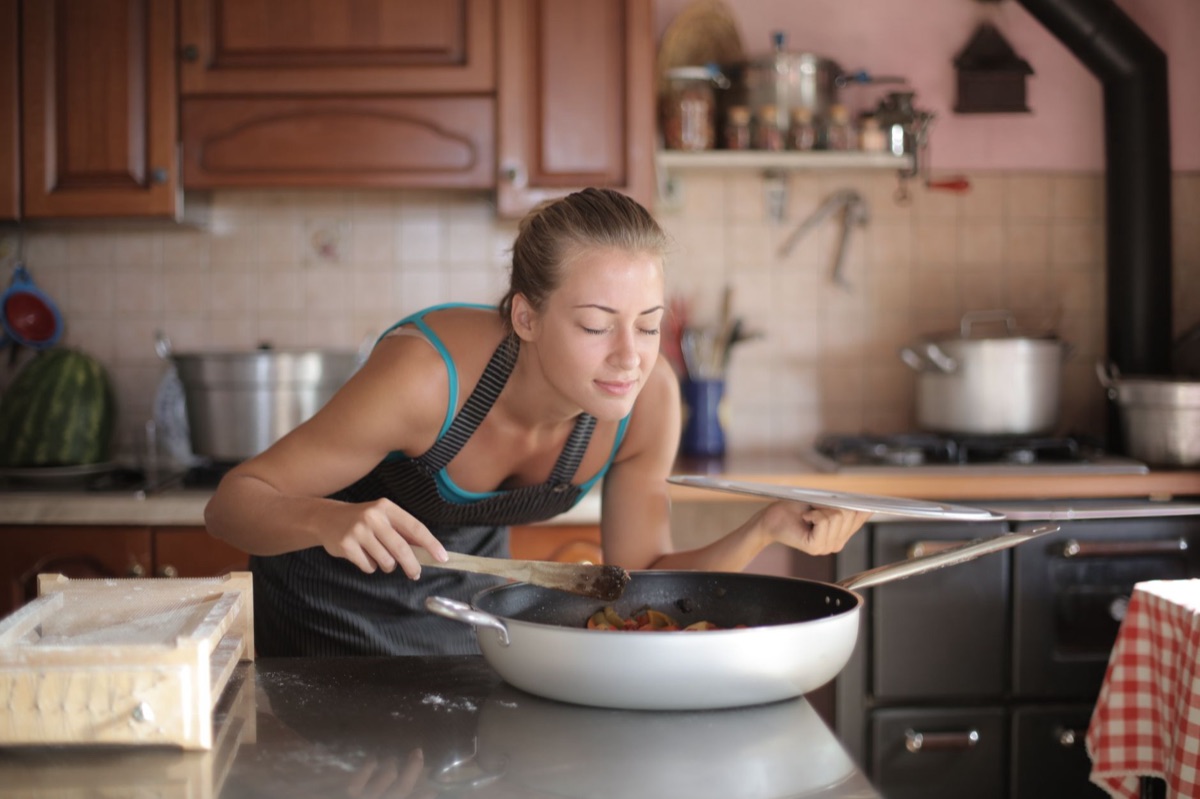
Why do viewers seek out precision-based cooking?
A hand reaches for a digital tablet in a dimly lit kitchen, scrolling through a sea of colorful food thumbnails. The viewer pauses on a video where the creator is not just tossing ingredients but measuring them with surgical precision on a digital scale.
This shift from artistic expression to repeatable technical processes turns a kitchen hobby into a reliable skill.
When a creator provides a specific measurement, they are not just giving a suggestion; they are providing a blueprint. This eliminates the frustration of failed meals and the waste of expensive ingredients.
For many, the kitchen is a place of stress, and a reliable recipe acts as a way to reclaim control over their environment.
When I first started following technical tutorials, I realized how much guesswork I was actually using in my own kitchen. I was surprised to find that even a few grams of difference could completely change the texture of my baked goods.

How do we distinguish between a hobbyist and a master?
The steam rises from a boiling pot, momentarily obscuring the face of a creator who is calmly checking the internal temperature of a roast with a probe thermometer. The kitchen is spotless, and every tool has a designated place on the magnetic knife rack.
Distinguishing between a hobbyist and a master comes down to the depth of the "why" behind the "how." A hobbyist shows you what they made; a master explains the science of why it happened.
This distinction is vital for anyone looking to build a foundational understanding of culinary arts through a screen.
| Feature | Hobbyist Content | Master-Level Content |
|---|---|---|
| Primary Focus | Aesthetic and Personality | Technique and Science |
| Recipe Structure | Loose suggestions/estimation | Precise weights and measurements |
| Error Handling | "It turned out okay" | Explaining why a mistake occurred |
| Equipment Use | Standard household tools | Specialized tools for specific tasks |
| Audience Goal | Entertainment/Inspiration | Skill acquisition/Reliability |
A hobbyist might use a "pinch of salt" or "a handful of flour," which creates variability and unpredictable results. In contrast, a master-level creator uses grams, milliliters, and precise temperatures.
This level of detail ensures that the recipe is transferable to different environments and different sets of ingredients.
I remember watching a video where a creator spent ten minutes explaining the specific temperature at which butter begins to brown. Before that, I thought cooking was just about following a list. Now, I look for the science behind the sizzle.
I used to think mastery was just about fancy equipment, but I noticed that true experts focus more on the science of heat control. After watching several professional demonstrations, I learned that the difference lies in understanding the 'why' behind every technique.
What is the value of a tested recipe?
A heavy cast-iron skillet sits on a gas range, the blue flame dancing beneath it as a steak begins to sizzle and release its aroma. The creator does not move the meat until a specific visual cue is met, demonstrating a mastery of heat management.
The value proposition of a tested recipe lies in the optimization of time, cost, and effort. A traditional recipe might be passed down through generations, but it often carries the "invisible" knowledge of the original cook that isn't written down.
A modern, tested recipe captures that invisible knowledge through rigorous trial and error.
- Predictability: You know exactly how much food you will have and what it will taste like before you start. 2. Resource Management: Precise measurements prevent the over-purchasing of ingredients and the waste of leftovers. 3. Skill Scaling: Once you master a precise formula, you can begin to understand how to manipulate those variables to create your own variations.
This optimization is particularly valuable for those living alone or in small households where ingredient waste is a significant financial concern. A recipe that calls for a whole bag of flour when you only need 100 grams is not an optimized recipe.
When I tried a recipe that hadn't been properly scaled, I ended up wasting several expensive ingredients. Now, I always look for recipes that have been adjusted for different kitchen environments to avoid those same mistakes.

How does the global context of cooking affect modern culinary content?
A child sits at a kitchen table, watching a parent prepare a meal while a light haze of steam or smoke drifts through the air from the stove. The scene is domestic and warm, yet there is an underlying awareness of the environment within the kitchen.
According to the International Renewable Energy Agency, 2.3 billion people lacked access to clean cooking in 2021. According to the International Energy Agency, achieving universal access to clean cooking by 2030 is a critical urgency.
According to the World Health Organization, cooking-related pollution causes 3.8 million annual deaths.
The health dimension of cooking is a growing topic in digital media. For instance, exposure to household air pollution (HAP) nearly doubles the risk of childhood pneumonia and is responsible for 4% of all deaths among children under five years of age.
While this statistic refers to broader household environments, it highlights the importance of ventilation and clean cooking methods—topics that professional culinary creators must address when teaching techniques like frying or searing.
The awareness of how cooking affects the body and the immediate environment is no longer a niche concern. It is a fundamental part of the modern culinary conversation.
As I began experimenting with international spices, I realized how much local ingredient availability affects the outcome of a traditional dish. I found that while the techniques are universal, the subtle shifts in flavor profiles require a lot of personal adjustment.

Why is community feedback essential for recipe accuracy?
A group of people sits around a large wooden table, phones in hand, comparing the results of a recipe they all cooked simultaneously. They are typing comments, sharing photos of their own versions, and debating the nuances of the seasoning.
Community engagement is the final layer of the verification process. High-quality creators often foster a community that acts as a massive, distributed testing lab.
This feedback loop allows creators to refine their recipes based on real-world variables like altitude, humidity, and ingredient quality.
When a creator releases a recipe, the comment section becomes a living document. Users report that "the dough was too wet" or "the salt level was perfect for my palate." This data allows the creator to adjust the "master formula" for future versions.
This collaborative environment turns a one-way broadcast into a two-way scientific inquiry.
This process ensures that the recipes are not just theoretically sound but practically applicable to a wide variety of people. A recipe that works in a professional kitchen in Istanbul might need slight adjustments to work in a high-altitude apartment in Bogota.
The sense of community also provides a psychological benefit. Viewers feel they are part of a journey toward culinary perfection, contributing their own observations to a collective pool of knowledge.
I once followed a popular recipe only to find it didn't work with my specific oven temperature. Reading the comments helped me realize that what works for one person might need slight tweaks for another.
How to build your own digital cookbook
A person sits at a desk with a notebook and a laptop, carefully organizing links to videos and typing out notes. They are not just collecting videos; they are building a structured library of knowledge.
To turn your viewing habits into a useful resource, you must move from passive watching to active organizing. A collection of bookmarks is not a cookbook; a structured system is.
- Categorize by Technique: Instead of just "Dinner," organize your saved videos by "Searing," "Baking," or "Fermentation."
- Annotate the Results: When you cook a recipe, write down what actually happened. Did you need more acid? Was the cooking time too long? 3. Standardize Your Units: Convert all recipes to a single measurement system (like grams) to make scaling easier. 4. Cross-Reference Creators: If three different masters suggest the same technique, that technique is likely a fundamental truth you should learn.
This systematic approach turns your digital consumption into a tangible asset. Over time, you will have a customized manual of success that is tailored to your specific tools and tastes.
I once spent an entire weekend organizing my digital notes because I realized I was just watching videos without ever actually learning. Once I started treating my notes like a real cookbook, my cooking changed overnight.
Note on Limitations: This guide focuses on digital content and does not replace formal culinary training or professional food safety certifications. While optimized recipes are helpful, they are tools, not absolute laws, and local ingredient variations will always require human judgment.
When I started organizing my own digital notes, I was surprised by how much easier it was to find specific techniques compared to my old paper notebook. I now make sure to include photos of my own results so I can track how my skills improve over time.
However, this does not apply in every situation.


Comments 0